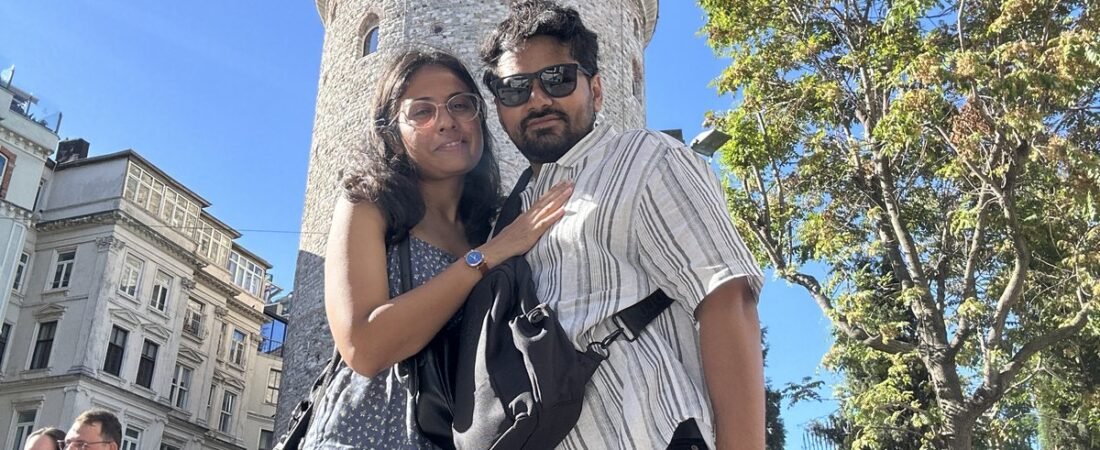
Istanbul was so beautiful. What stayed with us most is how the city mixes history and modernity: a palace of the sultans a short walk from busy cafés, centuries-old mosques next to tram lines, and ferries crossing between Europe and Asia all day.
We spent five days here in September 2026, split around our trip to Cappadocia. This is the Istanbul we saw.
In short: Five days in Istanbul: Sultanahmet, Galata, Balat, the Bosphorus and the bazaars, with history, food and tips.
A city with three names
Istanbul was an imperial capital for almost 1,600 years. It began as the Greek city of Byzantium. In the 4th century the Roman emperor Constantine made it his new capital, and it became Constantinople, the heart of the Byzantine Empire for more than a thousand years. In 1453 the Ottomans took the city, and it remained the capital of their empire until the early 20th century.
You can still read all three chapters in the skyline. Byzantine walls and cisterns, Ottoman mosques and palaces, and a modern city of more than 15 million people on top.
The city of seven hills
Like Rome, Istanbul is known as the city on seven hills. The first hill, at the tip of the old peninsula, is where ancient Byzantium was founded, and it’s where you’ll find Hagia Sophia, the Blue Mosque and Topkapı Palace.
In practice, the seven hills mean one thing for travellers: a lot of walking uphill. It was the biggest lesson of our trip.
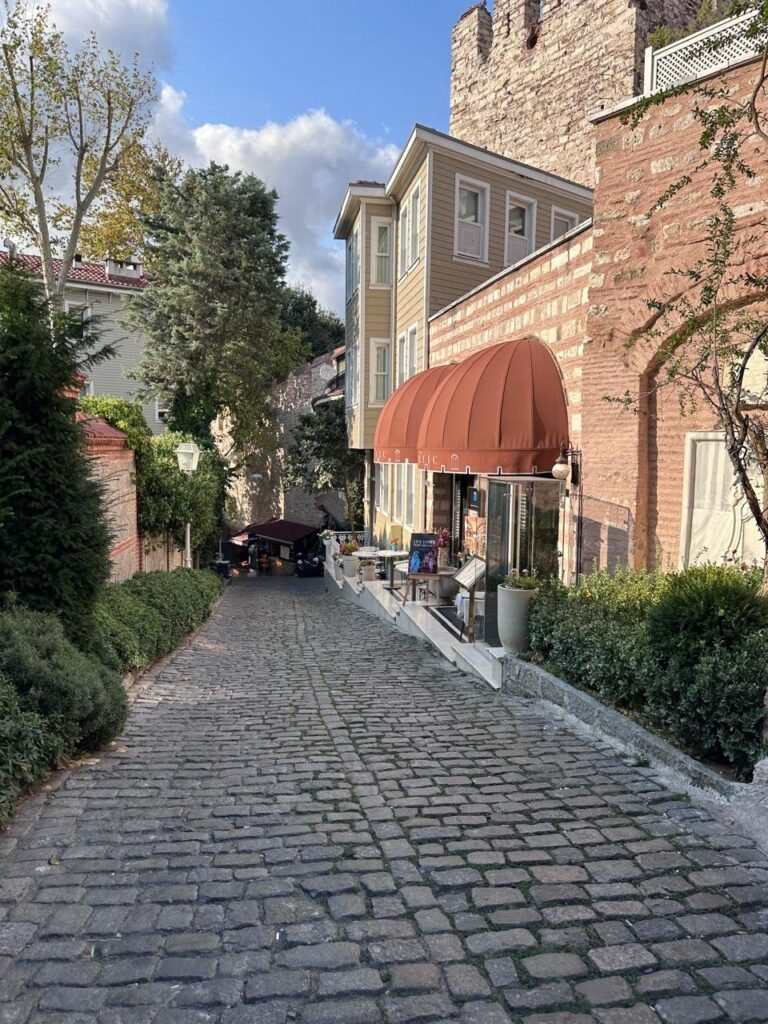
Sultanahmet: the old city
Most of Istanbul’s famous sights sit within a short walk of each other in Sultanahmet.
The Blue Mosque
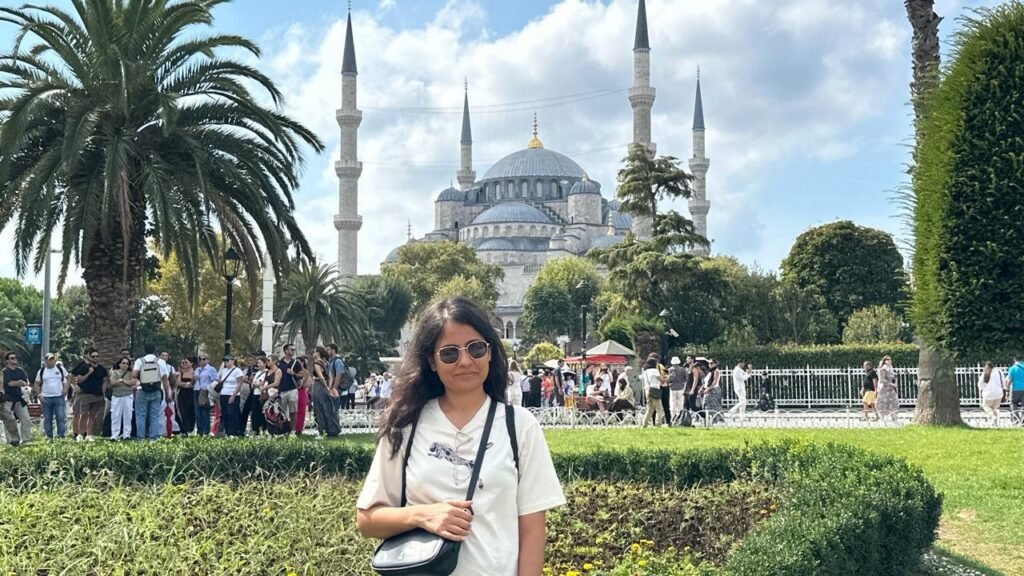
Its official name is the Sultan Ahmed Mosque, built between 1609 and 1616 for Sultan Ahmed I. It has six minarets, and its popular name comes from the blue Iznik tiles that line its interior. Standing in the courtyard and then stepping inside under the domes is one of those moments every Istanbul trip is built around. It’s still a working mosque, so visits pause at prayer times. Entry is free; cover your head, shoulders and knees.
Hagia Sophia
Across the square stands Hagia Sophia, built by the Byzantine emperor Justinian and consecrated in 537. For more than 900 years it was the greatest church in Christendom, and its huge dome was an engineering wonder of its time. In 1453 it became a mosque, in the 1930s a museum, and since 2020 it has been a mosque again. Foreign visitors now enter the upper gallery, with its Byzantine mosaics, on a separate ticket (€25 per person at the time of writing), while the ground-floor prayer hall is free for worshippers. The same modest dress code applies.
The Basilica Cistern
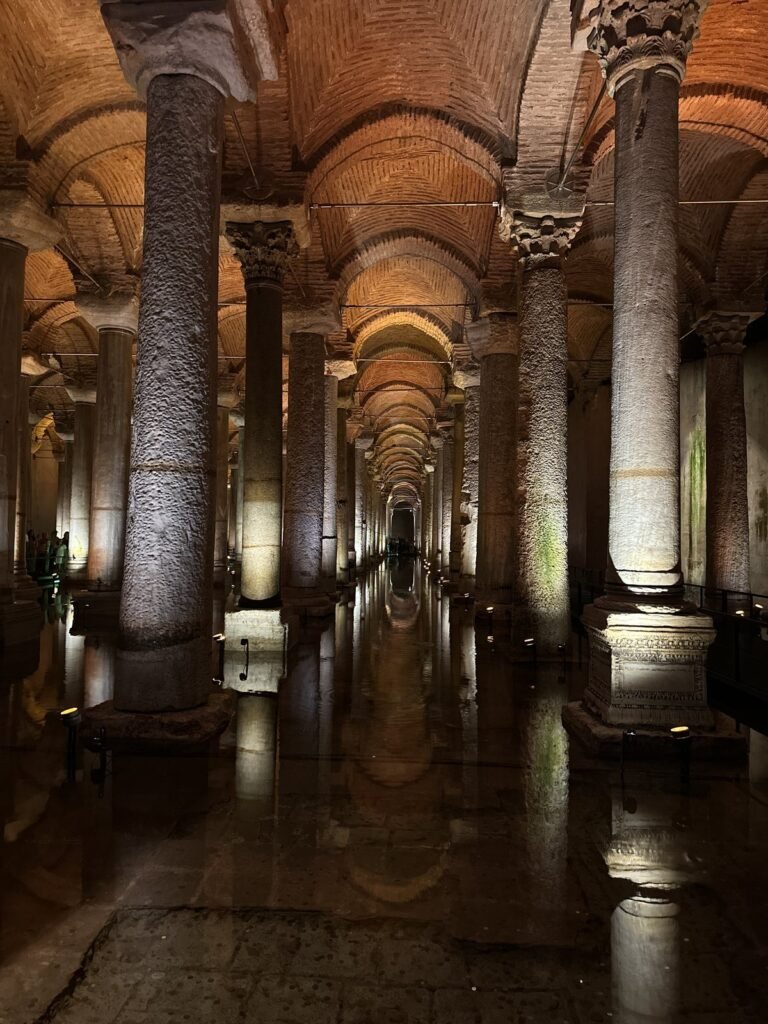
Built in the 6th century to store water for the city, the cistern is a huge underground hall of columns lit in warm light. Look for the two Medusa heads used as column bases at the far end.
Topkapı Palace
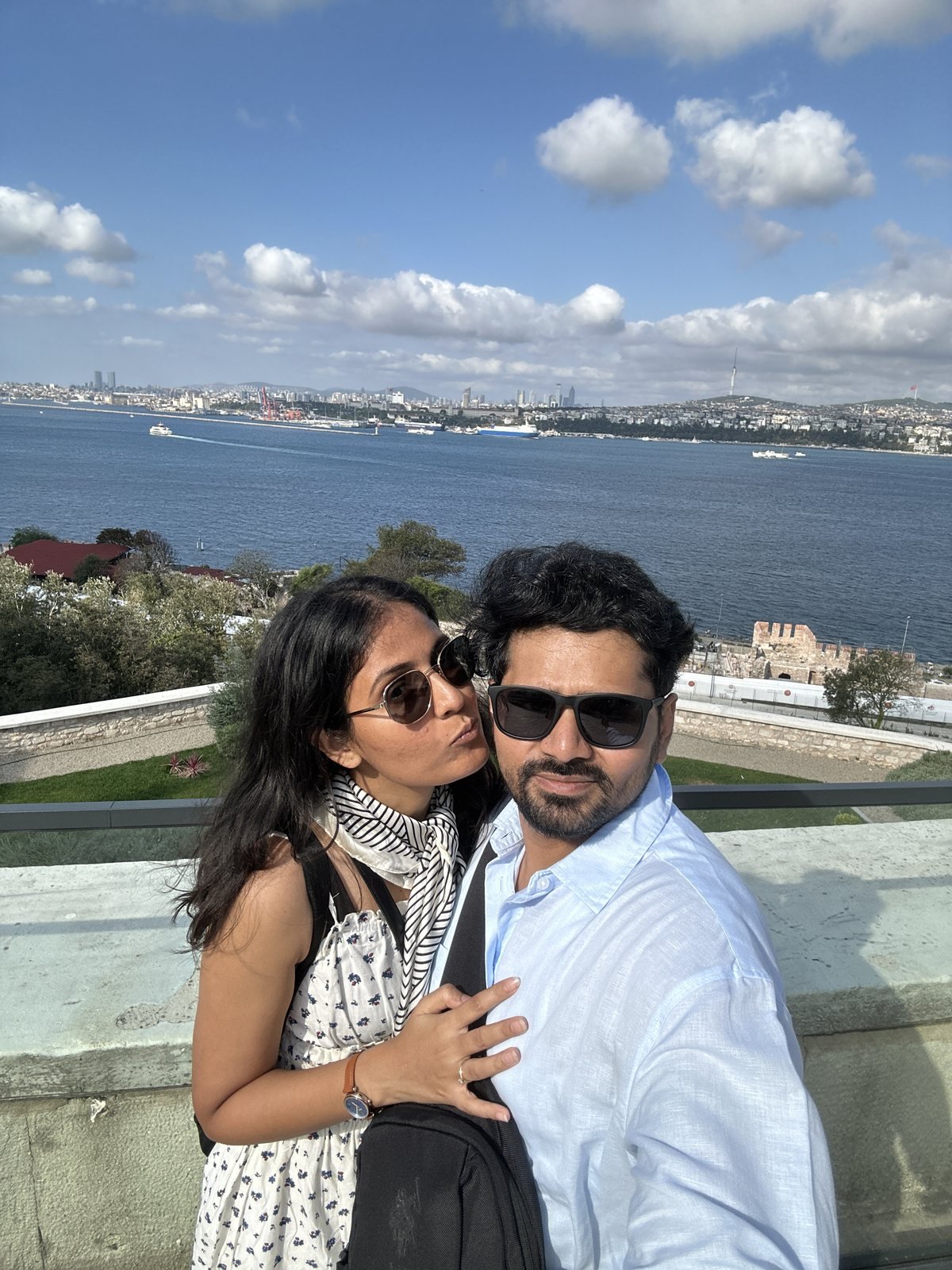
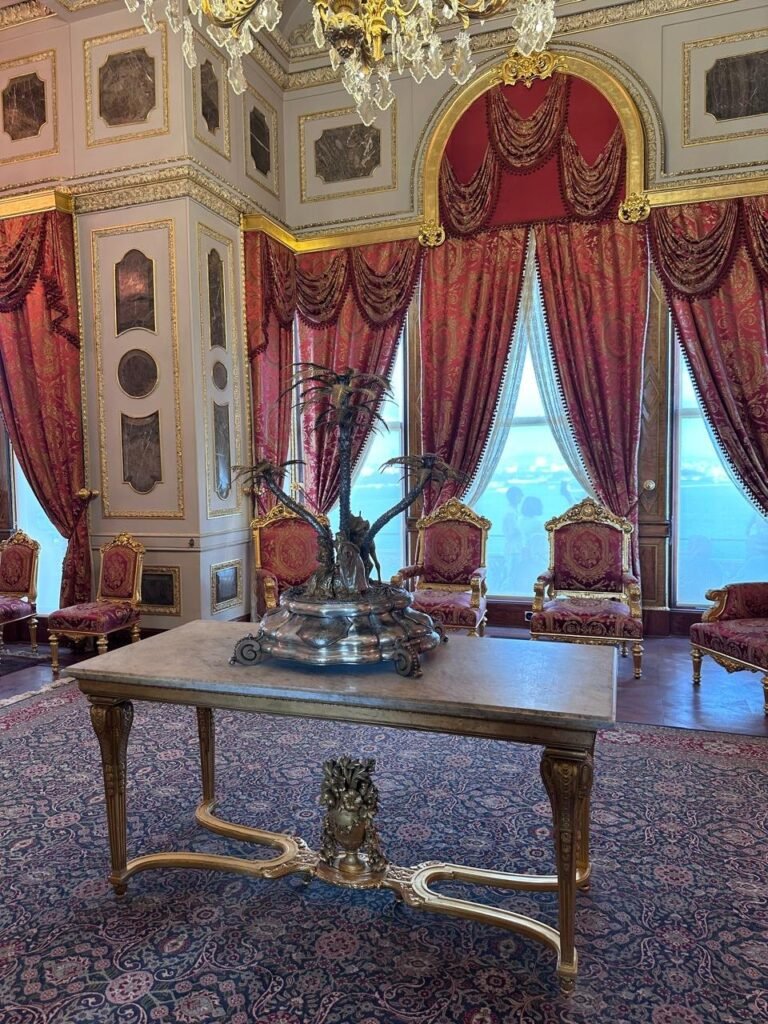
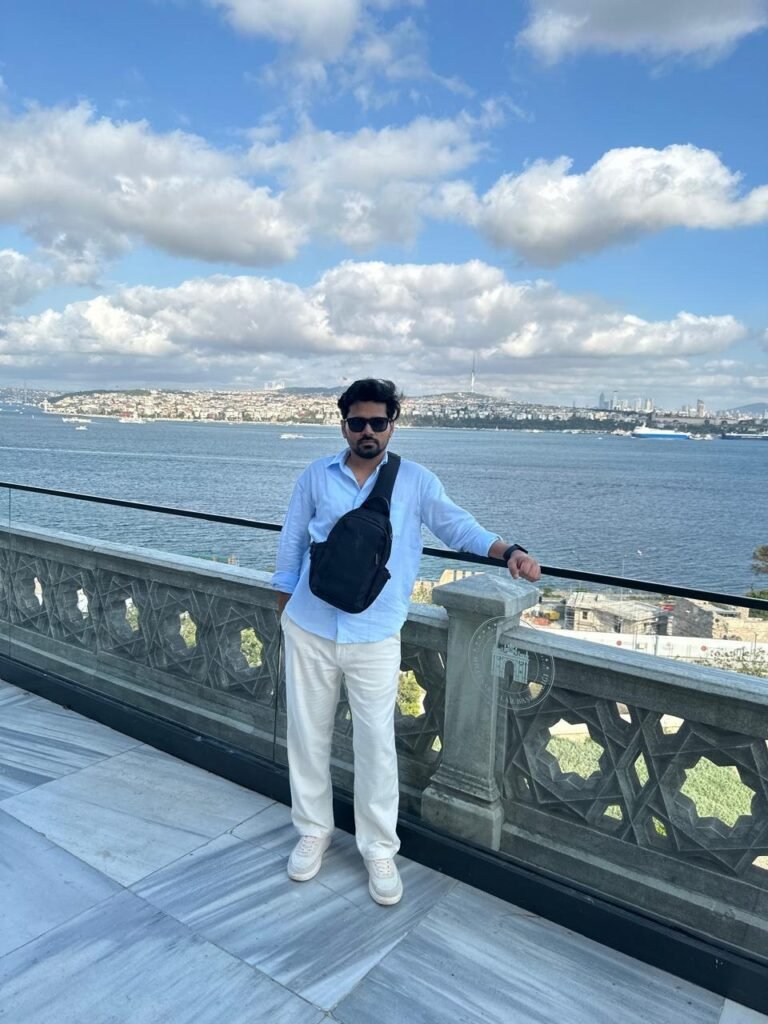
Sultan Mehmed II began building Topkapı in 1459, six years after he conquered the city, and for almost four centuries it was the home and court of the Ottoman sultans, until they moved to Dolmabahçe Palace in the 1850s. It became a museum in 1924. Walk through the courtyards, the tiled rooms, the richly furnished halls and the gardens, and save time for the terrace that looks out over the Bosphorus.
Galata Tower and İstiklal
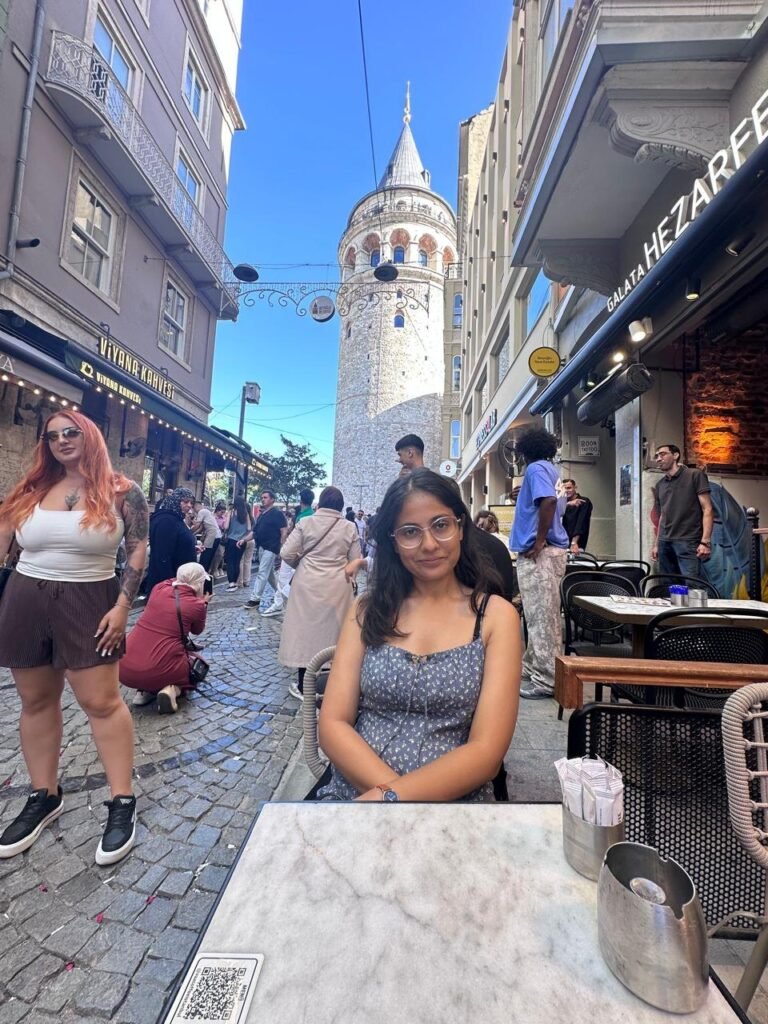
Across the Golden Horn, Galata Tower rises over steep streets full of cafés and small shops. The Genoese built it in 1348 and called it the Tower of Christ. Today it’s about 63 metres tall, with a museum inside and a balcony near the top that circles the whole tower (tickets are €30 per person for foreign visitors at the time of writing). Even without going up, the streets around it are worth an afternoon. Walking around Galata was one of the moments that felt most like us on this trip.
From Galata, İstiklal Avenue leads up to Taksim, with the red nostalgic tram running down the middle.
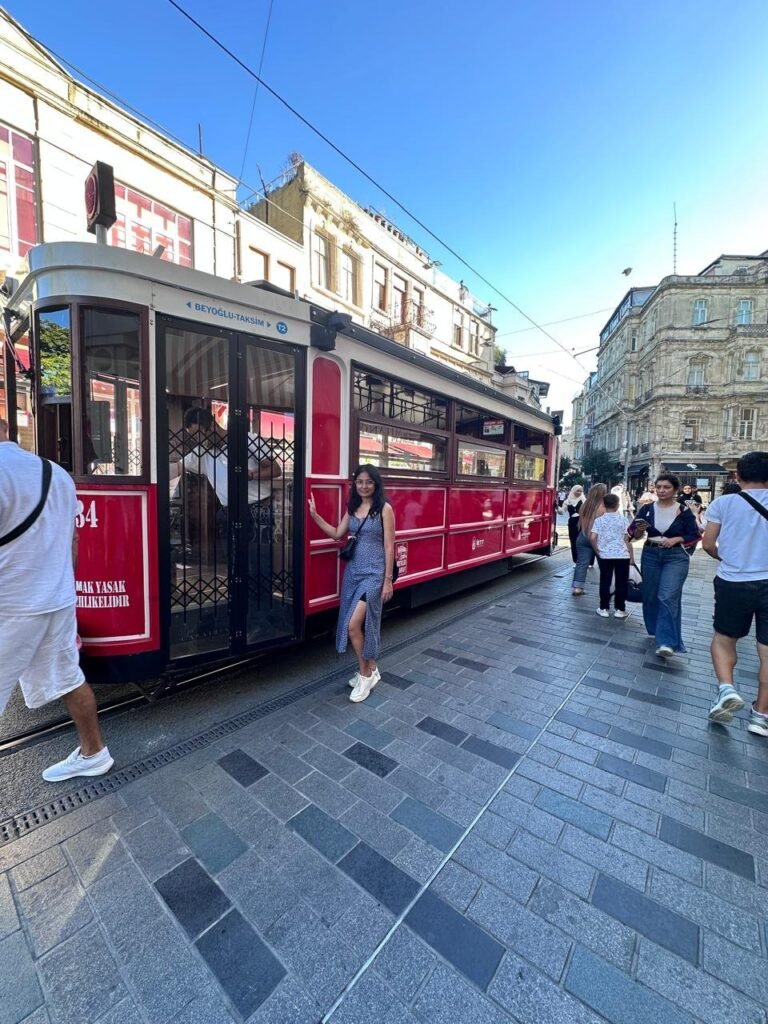
Fener and Balat
Balat is Istanbul at its most colourful: painted houses, cobbled lanes, the rainbow stairs and rooftop cafés looking over the Golden Horn. It’s also all slopes and stairs, so go slow.
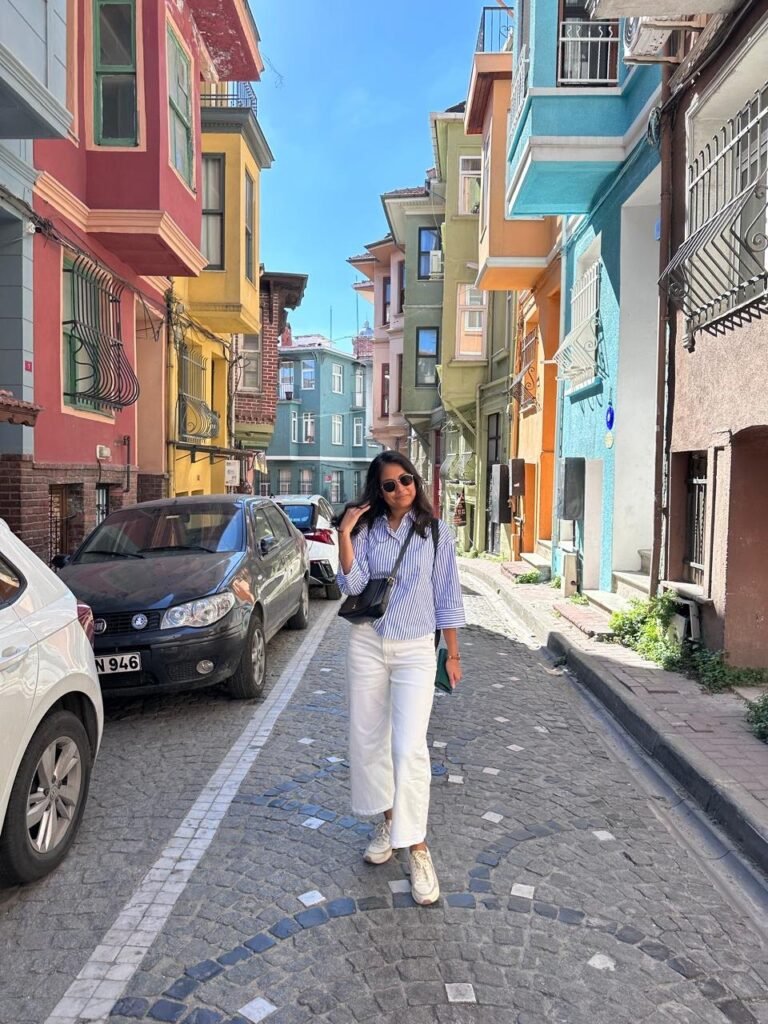
The Bosphorus at sunset
The Bosphorus is the strait that separates Europe and Asia. We took a sunset cruise past palaces, mosques and the Bosphorus Bridge, ending near Maiden’s Tower as the lights came on. It was our favourite evening of the whole trip.
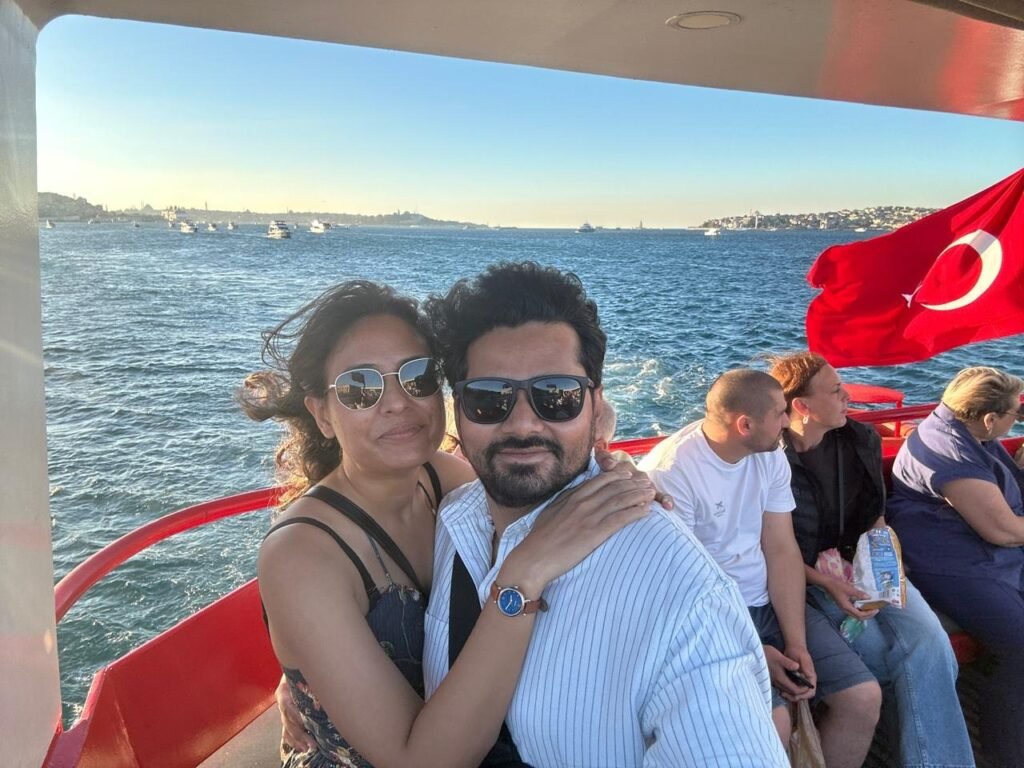
The Grand Bazaar
Work on the Grand Bazaar began in the 1450s, soon after the Ottoman conquest, and it grew into one of the oldest and largest covered markets in the world: more than 60 covered streets and thousands of shops selling lamps, ceramics, carpets, jewellery, leather and spices, with small cafés tucked in between. It gets very busy, so go in the morning if you can. It’s closed on Sundays.
The Spice Bazaar
Near the water at Eminönü, the Spice Bazaar was completed in 1664 as part of the New Mosque complex. In Turkish it’s called Mısır Çarşısı, the Egyptian Bazaar, because it was funded with revenue from Ottoman Egypt. It’s smaller than the Grand Bazaar and full of spices, Turkish delight, teas, dried fruit and nuts. Entry is free. One tip: the cheap “Turkish saffron” sold in many shops is usually safflower, not real saffron.
Turkish tea
Tea (çay) is everywhere in Turkey. It’s grown along the Black Sea coast, brewed strong in a two-level teapot and served in small tulip-shaped glasses, usually without milk. You’ll be offered it in shops, after meals and in the middle of the bazaar. In 2022, the tea culture of Turkey and Azerbaijan was added to UNESCO’s list of intangible cultural heritage, as a symbol of hospitality and conversation.
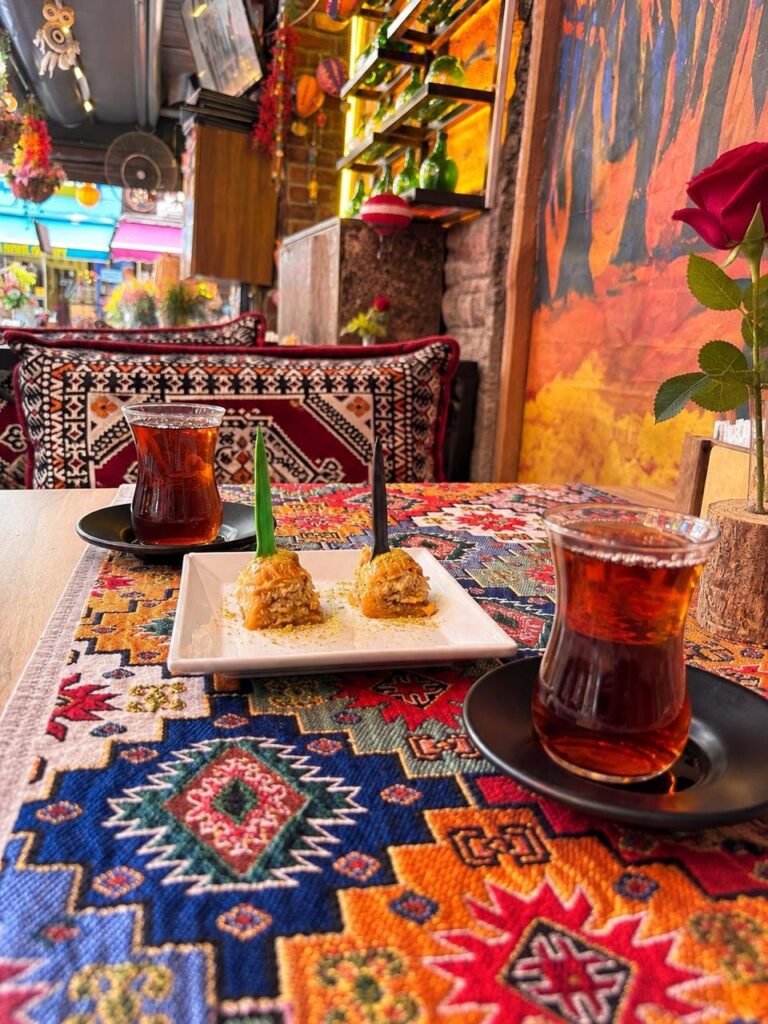
Turkish coffee
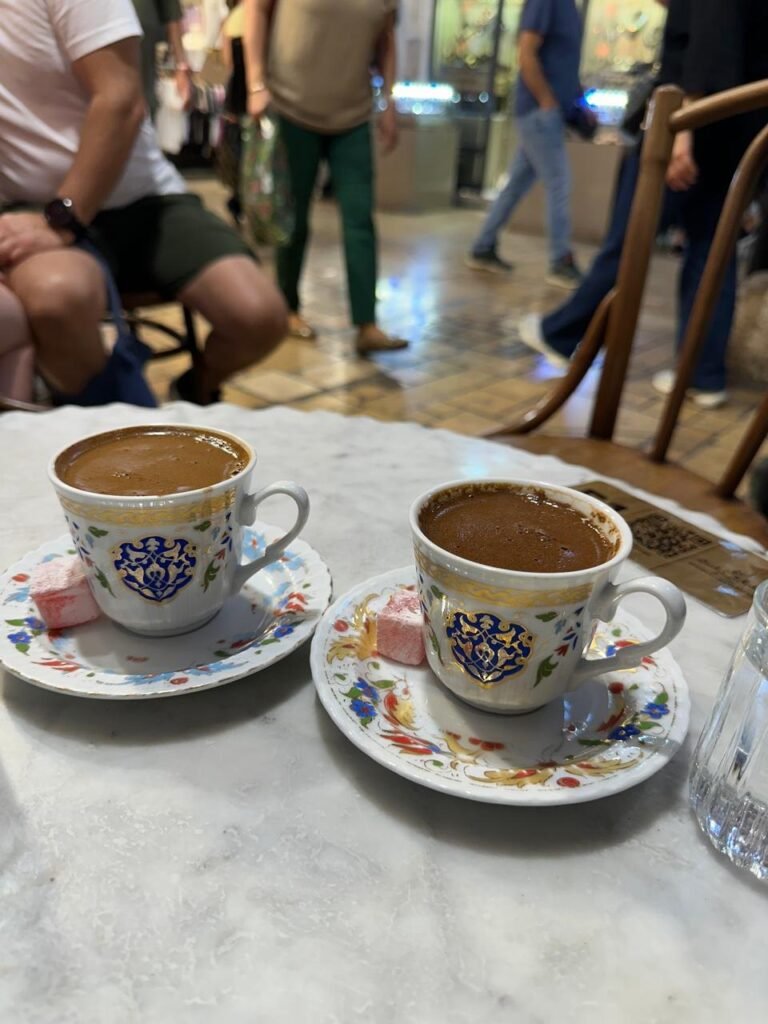
Turkish coffee is made from very finely ground beans, boiled slowly with water (and sugar, if you want it) in a small pot called a cezve, and served unfiltered, with the grounds settling at the bottom of the cup. It usually comes with a glass of water and a piece of Turkish delight. Turkish coffee culture and tradition was added to UNESCO’s intangible cultural heritage list in 2013. Sip it slowly and stop before you reach the grounds.
What to eat in Istanbul
Turkish food goes far beyond kebabs. Look out for simit (a sesame bread ring sold on street carts), Turkish breakfast spreads, pide (Turkish flatbread with toppings), grilled kebabs with bulgur, baklava and Turkish delight.
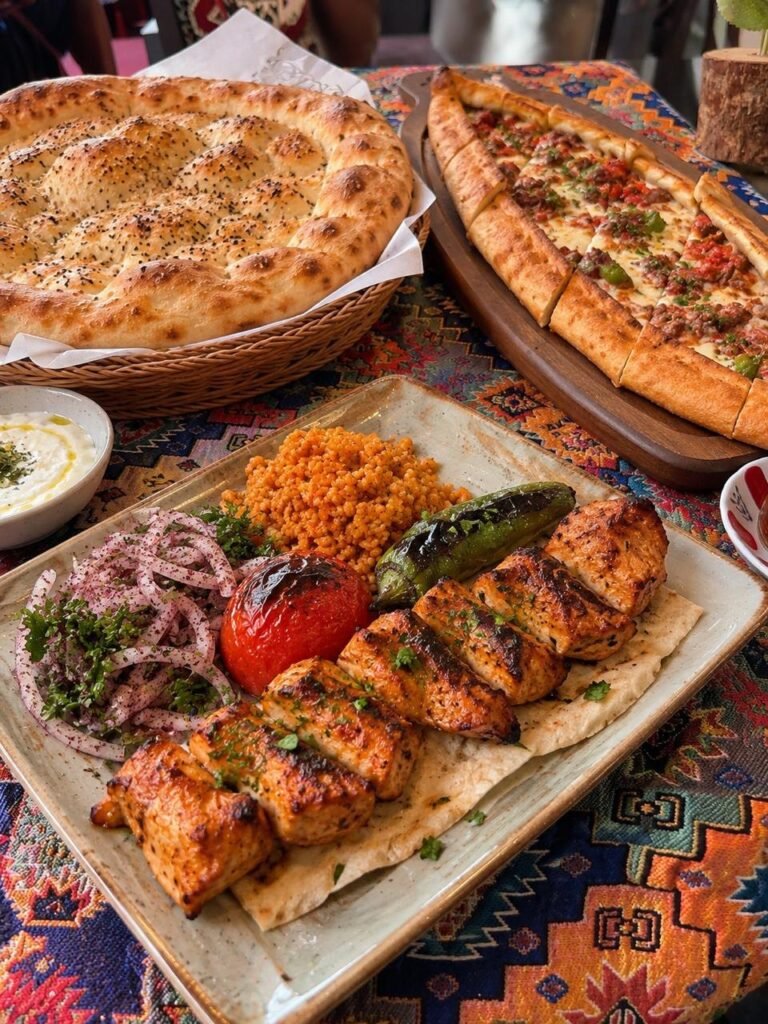
Where we ate, both in Sultanahmet:
- Seven Hills Restaurant: the rooftop of the Seven Hills Hotel, with views over the Blue Mosque, Hagia Sophia and the sea. Around 1,200 lira for two.
- India Gate Indian Restaurant: biryani and Indian food for when you want a taste of home. Around 1,200 lira for two.
We spent about 2,500 to 3,000 lira a day on food for the two of us.
Tips for Istanbul
- Stay near Sultanahmet or Sirkeci so the old city is walkable.
- Wear comfortable shoes. The hills and stairs add up fast.
- Dress modestly for mosque visits, and carry a scarf.
- Check ticket prices before you go. Hagia Sophia’s gallery and Galata Tower charge foreign visitors in euros.
- Do the Bosphorus at sunset if you can.
Planning the full trip? Read our 9-day Turkey itinerary and our Turkey experience as an Indian couple.
Questions about the trip? Ask us on Instagram at @two_go_places.